
Perhaps this post would belong to a science fiction setting, but there is an overlap with scientific ideas, and a dash of idealism as well. The original concept has been popularised in sci-fi for decades, and subsequently explored by scientists, but so far it remains a dream, and something of a long reach too.
At present, we explore both the solar system and the wider universe via satellites, telescopes and probes. Direct human exploration of the cosmos is out of our reach, owing to the incredible distances between stellar bodies, even within the solar system. It is believed to take between six and nine months for humans to reach Mars, one of the closest celestial bodies to earth, and this is when the two planets are at their closest approach, a distance of 56 million kilometres. To traverse the outer solar system would take years, even decades, placing human flight more or less off-limits, and that is to say nothing of extra-solar missions.
Reaching our nearest Neighbour
Proxima Centauri is a red dwarf star, some 4.24 light-years from our sun. To put it another way, it is 40.17 trillion kilometres away. The fastest human-made object, the Parker Solar Probe, would take over 7,000 years to travel that distance, whilst the Voyager probes would take 77,000 years. These are clearly not timescales that work for direct human exploration! The question becomes, what might we be able to do about it?
The short answer is: nothing. We lack the technology to do much other than point telescopes at distant stars, and collect evidence about the universe from there. Our present understanding of physics, space and time suggest that faster-than-light travel is impossible, and will always be impossible.
Is this a somewhat beguiling, frustrating observation? Yes. The notion that the wider universe will forever be off-limits to humanity, save for lengthy sleeper missions (which are not without serious technical challenges of their own), is depressing. We are a curious species, and we want to get out there. We want to see and observe the fascinating sights of the Milky Way. It would be incredible to see another star system up close, and even more amazing to walk on an alien world. To think that we may never be able to do that is not a happy thought.
Speculative Suggestions
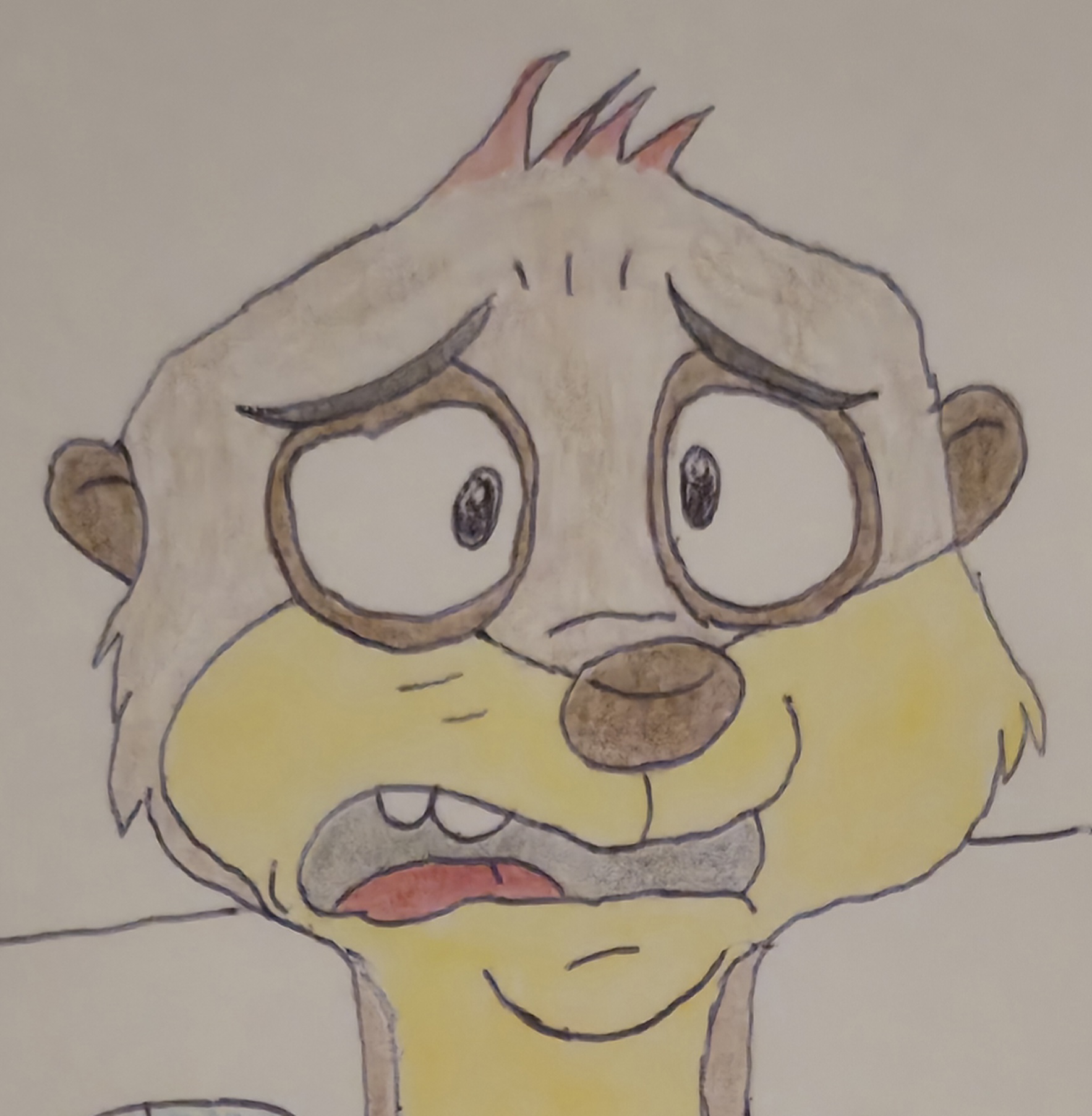
Despite the lack of evidence for FTL being possible, this has not stopped some scientists from theorising, and going as far as to do the math, so to speak, on a couple of concepts. The Alcubierre Drive is one such idea, which proposes warping space/time to create a bubble around a ship (not too dissimilar to Star Trek’s famous warp drive). A static form of this idea, in the shape of a Krasnikov Tube, has also been developed, which from this meerkat’s limited understanding suggests some form of wormhole.
The problem with both ideas is a reliance of vast quantities of as-yet unproven exotic matter, with negative energy density. Again, I not profess to understand the detailed nature of these devices, but I understand enough to know they present major hinderances to the concepts.
Wormholes – another idea rendered popular in sci-fi – have been proposed as a theoretical means of getting somewhere faster. Their existence remains unproven, but the theories suggest there are a number of means by which they could exist. The problem would rest in finding them, and relying on them to link regions that would be of value to humans (such as star systems with habitable worlds).
What about UFOs?
Proponents of UFOs being alien spacecraft might argue that these craft have reached earth from distant worlds, and done so using advanced technology to travel faster than light. There is absolutely no way to verify this in any way shape or form, and some theories suggest that our possible alien visitors are coming to earth from another dimension, which would bypass the question of FTL completely. Nonetheless, this is another persistent idea in the argument that FTL is possible.
What is more clear is that, at this moment in time, travelling faster than light in a way that doesn’t violate the laws of nature is beyond human understanding. We may cling to hope, even a fool’s hope, but’s what’s wrong with daring to dream?
Back to The Meerkat of Science!


Be First to Comment