I find drawn back to what is rapidly becoming the pertinent topic of our time, at least in terms of creativity and imagination. There are certainly many other ways in which AI is impacting the world, and many of them are serious concerns, but the immediate focus of this post relates to human ingenuity and innovation in creative media.

The single most obvious area of AI influence has been with art, and specifically drawings, paintings and videos. With tools like Gemini and Bing – along with several others – granting anyone the opportunity to feed a prompt or idea into an image generator, anyone can now produce art. Or can they?

Does an AI artist even exist as a concept, and should it exist? If the generator does all of the work, save for coming up with the inspiration, wouldn’t a better term for AI artist be ‘prompt sourcing assistant’, or some other such term? It’s not like the prompter has spent hundreds of hours practicing, making mistakes, learning and growing as an artist. They haven’t poured their hearts into it. Artists create with their souls, minds and hands. Prompters offer an idea to a line of code.

I am no artist. I have exploited AI in the past for Meerkat Musings, and I may do so again. At no stage would I pretend that I am an artist for doing so. Don’t get me wrong, AI can be a potent and useful tool to exploit, but if it starts to replace genuine human endeavour, if we lean on AI as a crutch, we will lose our means to think critically, and creatively imagine. At that stage we might as well become robots ourselves. To be an artist, you need to wield your mind and body.

This matters to me from the perspective of an author. It would be easy to let AI write for me, but what would be the point? From a grammatical point of view it would be near-perfect, but would it have heart, tension, passion and power? No. The same applies to music, film and games. Again, this is not to say that AI can’t be used as a resource, but we not let it do all the work. We’ll wind up with psychological and emotional atrophy if we walk that particular path.

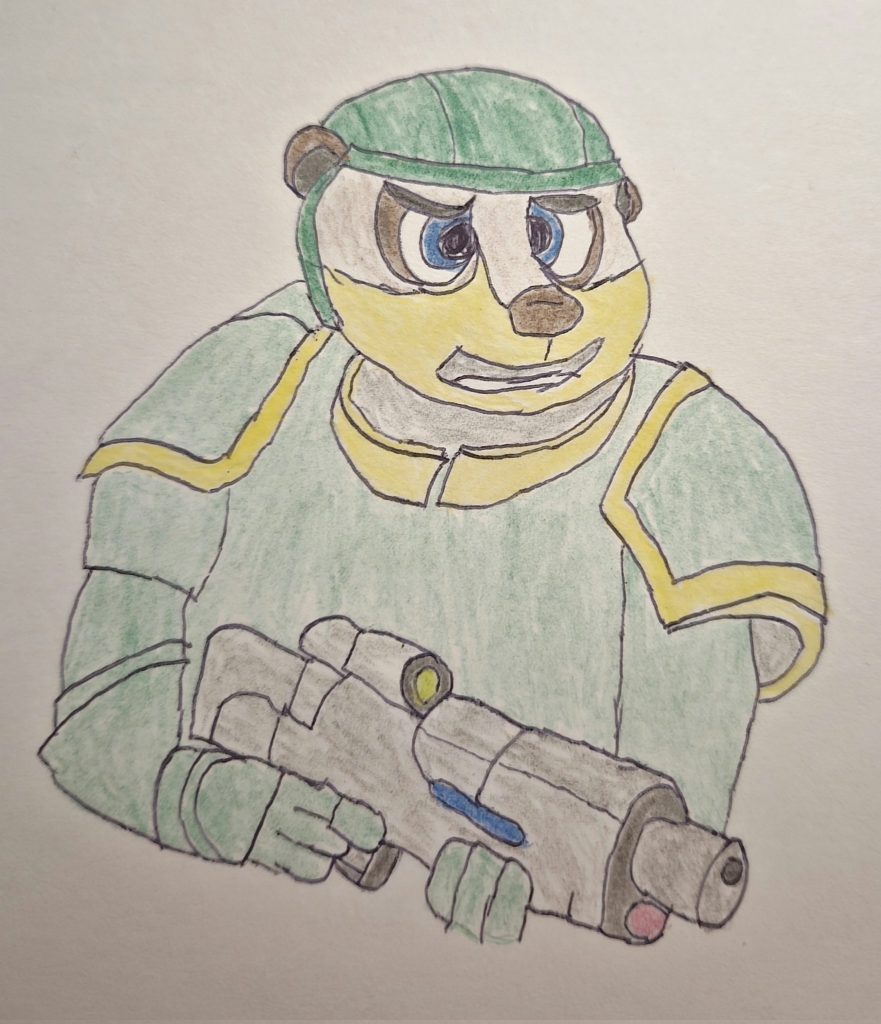
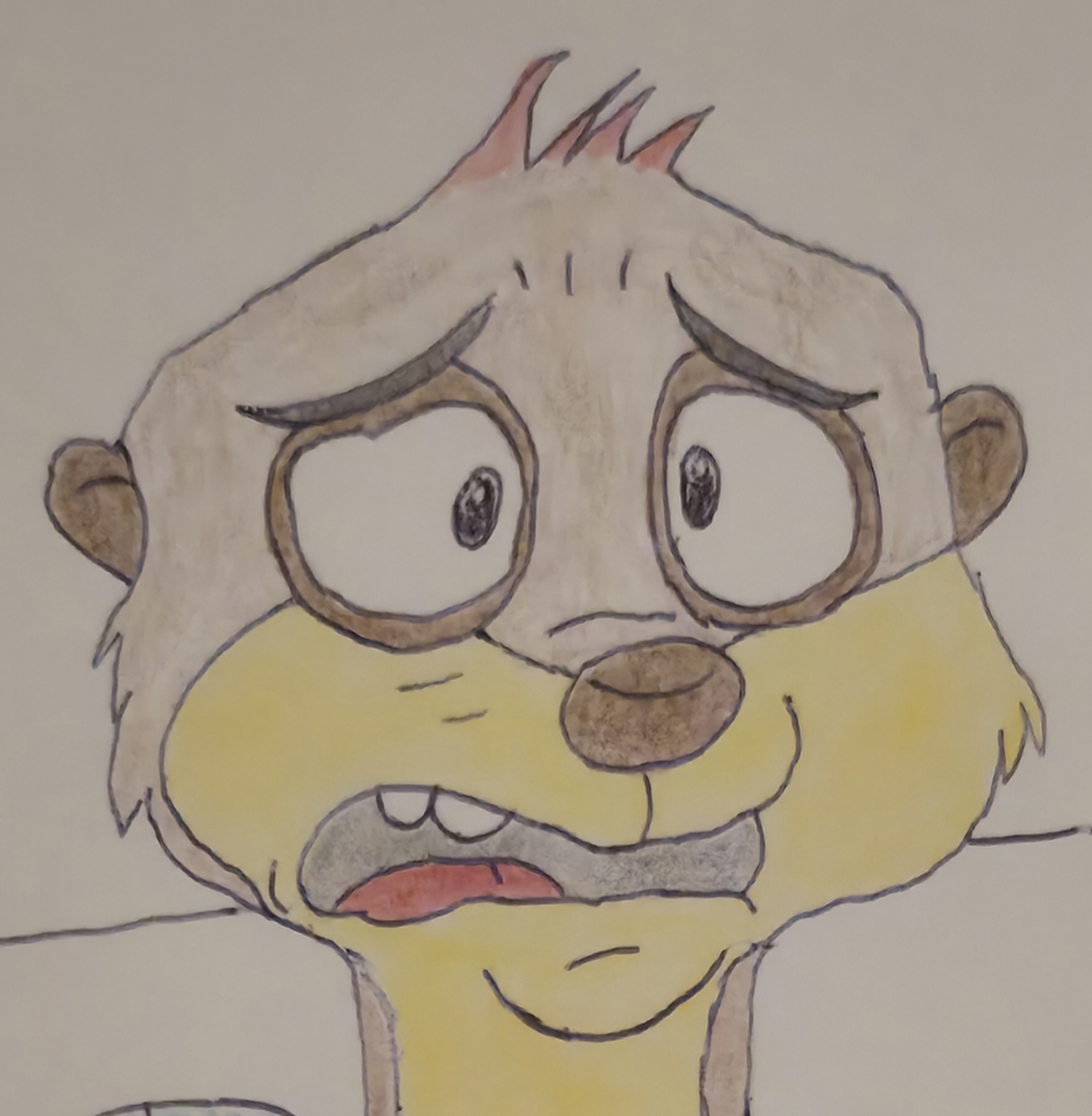
I’ll wrap up this post with some of my drawings, and some of my generations. I know which ones I’m proud of.


What are your thoughts, my dear ‘kats?
Back to The Thinking ‘Kat

A while back, I wrote a post about scammers. In the wake of a spate of recent emails, and a somewhat intriguing phone call, I find myself revisiting this subject, because those who would deceive us out of our money are evolving, and it is important that we evolve right along with them.

The first problem relates to being an author, though it would not surprise me in the least if similar methods are being exploited in other fields. What I have had a lot of – via email and also via messages on Instagram – is contact from people feigning interest in my books. What a lot of these people are doing is running the blurbs through an AI filter to create an email they think is credible, but it’s not, not by a long shot. Behind the faux praise and fawning statements there is a sales pitch (even if they deny this). They’ll want to offer services behind getting more reviews on Goodreads and Amazon, and drive awareness of the brand, so to speak.

It’s all very wishy-washy, and no doubt their hope is that following the offer of a review (or perhaps leaving a review to show their good faith), I will reciprocate with interest in their wares. I don’t. A little bit of research reveals there is no business, no plan, nothing other than an effort to get cash.

In some cases, we even have cases of false identities. I had an email from the New York Time bestselling author Ken Follet… except I didn’t. I don’t expect an established literary giant to randomly email me of all people, to ask about my journey as an author. I doubt Mr Follet even knows I exist! As with many of these messages, it is worth checking the sender’s email address; Mr Follet is also unlikely to be using a throwaway gmail account.

I touched about the use of AI in these efforts, and that comes across pretty clearly from the way in which some of these scammers have wielded my books’ blurbs. Regurgitating my stories back at me via the blurb is not going to convince me that you’ve read the books! If you truly want to persuade me you’ve read my work, buy it, read it, and leave a thorough review. Perhaps then I’ll find you to be credible.

AI has reared its head in another way. I rarely answer random numbers that call my mobile, and have set up spam detection, but one call came in that wasn’t flagged, and though I was initially hesitant, I thought ‘eh, why not?’ The voice was of an English gentleman, but something seemed off. I don’t think I was talking to a human being. Needless to say, this is a new escalation in the world of scams, because whereas a lot of people – rightly or wrongly – hang up or ignore callers with a foreign accent, they may be more inclined to heed a call from someone they think is local, even if they’re calling from ‘Energy Supply Company’ or ‘Loft Insulation Company’, as opposed to a genuine business.

Be vigilant. Never click on links in emails that you have even the slightest distrust of. Contact the alleged company via an internet search and websites relating to that search. Check the sender’s email address. See if they address you by name or as ‘dear customer’ or via your internet pseudonym. Get some kind of call guard for your mobile – a lot of them are free – to screen for spam calls, and if you do answer a number you don’t recognise, be very, very hesitant about revealing information. These days, even saying ‘yes’, or giving any kind of affirmation, can be risky, given how calls are recorded and your speech abused.

Don’t let scammers win!

Back to Meerkat Prompts

Sometimes, sci-fi becomes science fact, or at least, we can see the gradual progression from fiction to reality. The idea of augmenting the standard Mark I human with technology is nothing new, and serves as the basis for a lot of stories, not all of them good. From the Borg in Star Trek, to the Cybermen from Doctor Who, there are warnings about how artificially enhancing humans with technology could go badly wrong.

Of course, sci-fi does not have to become sci-fact. There are companies out there developing bionic limbs, to help those who have suffered life-changing injuries, or those born without limbs, to gain a full range of motion. It’s an incredible field, and it’s only going to get more sophisticated. These areas are not about upgrading humanity, but rather repairing loss and damage, but could it all go a step further? Could we update humans into say, a version 1.1, with small upgrades here and there?

There are enormous risks with such ideas. The possibility of a multi-tiered human race is a troubling one, if enhancements are based on money (and let’s face it, money and greed would inevitably be the driving force of such technology). The rich and powerful would undoubtedly hoard the best upgrades, and price them out of reach of the average person. Tampering with our… let’s call it base form, be it via cybernetics or genetics (or both) is also a hallmark of eugenics, something the Nazis (among others) coveted.

This doesn’t mean that finding ways to cure diseases, repair broken limbs, and fix genetic disorders should stop. It would be short-sighted and narrow-minded to give up on developing the means to stop people from suffering. It has to be done in the right way, which means ensuring the means to fix serious injuries and diseases is an option open to everyone, not just the elite and the wealthy.

Back to Meerkat Prompts

The Simens C35i

Above, you have a picture of the very first mobile phone I ever owned. The Simens C35i was a fairly typical phone for the year 2000, with all the usual refinements of the era. You could both call, and send texts! Two whole functions, pretty amazing right? It had a decent battery life, and the signal… it wasn’t too bad, and to be fair, you can’t really hang the signal too much on the phone.

Consider for a moment that this was 24 years ago. This may seem like a long time, and in some ways it is, but 24 years is also the blink of an eye. Back then, around 44% of UK households had a mobile phone. Today, that figure stands at around 93%, which goes to show how rapidly the mobile market has exploded. Not only that, but the sophistication of the devices we stuff into pockets and handbags has leapt forward at what sometimes feels like an impossible rate.

The HTC Legend. By John Bullchicken – Own work, CC BY 3.0, https://commons.wikimedia.org/w/index.php?curid=11077559

The HTC Legend was the first smartphone I ever owned. I had wanted the HTC Desire, but that was a little beyond my price range. Still, the Legend was good, and it was my first true taste of all the capabilities of smartphones. It used the Android operating system, which back in 2010 (when the Legend was released) accounted for around 10% of all smartphone operating systems. I quite liked it, and most Android phones had the benefit of being considerably cheaper than the iPhone. Back then, Apple’s operating system – exclusive to iPhones – accounted for 33% of the global market at the start of 2010, and 23% by the end of the year, quite the decline.

Smartphones transformed what a mobile phone was. Gone was a simple device to use for calls and texts, and in its stead was something akin to a computer. Mobile phones have become nearly as powerful in many respects, and they have absorbed other technologies. Phones are now cameras, music players, recording studios, and web browsers. They are mini games consoles. The sum of all human history and knowledge is accessible with a device that you can hold in the palm of your hand. This is pretty sensational, no matter what way you spin it.

There is a downside. Have smartphones dented our ability to concentrate? The rise of the smartphone has also led to the rise of short, snappy videos, such as those found via TikTok, and instant gratification is now at our fingertips. Plus, are we prepared to challenge ourselves and truly think, or fire up the phone, go to the calculator, and bypass any actual work? Then again, some might say that having all the tools instantly available to us lets us be more productive.

There’s something else to consider too, and this can be good or bad as well. As with computers, and thanks to the advent of wireless and cellular internet access, people can now easily spread ideas and opinions. You can capture a video of something happening, and share it within minutes. You can even live-stream major events to anyone around the world. There exist serious questions as to how this affects privacy, but by the same token, this should also make us think about accountability.

As this technology will undoubtedly continue to evolve, this too raises questions. People want the latest phone, all the time. We have developed something of a wasteful culture where phones are concerned. There is a concern that manufacturers build in obsolescence, because if people cling to their device for several years there’s no money being made from selling new ones. Wider queries include whether or not we end up with 3D displays, and whether or not we eventually see a sort of merging of flesh and technology (which should be in the far, far future!).

What do you think of the mobile phone?

Back to Meerkat Prompts